
Jaume Plensa’s The Four Elements: Where Art, Memory, and the City Meet....
Leuven is home to a remarkable work of contemporary art that quietly connects past and present, body and spirit, city and university. The Four Elements is the first permanent public sculpture in Belgium by the internationally celebrated Spanish artist Jaume Plensa, known for creating powerful artworks that blend spirituality, human presence, and collective memory.
One Artwork, Two Places
The Four Elements is not confined to a single location. Instead, it unfolds across two sites, each adding its own layer of meaning to the artwork.
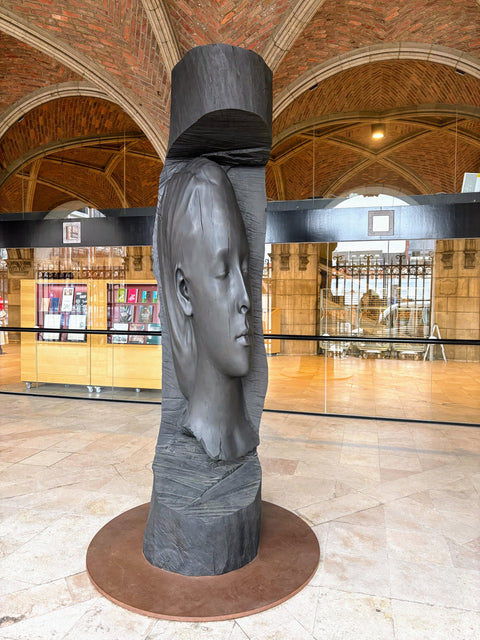
The first part, Fire, is located inside the gallery of the KU Leuven University Library. This bronze sculpture refers to the dramatic destruction of the university library during the First World War and its powerful rebirth afterwards. Fire here is not only about devastation, but also about resilience, renewal, and the enduring importance of knowledge.
The second part of the sculpture brings together Water, Earth, and Air. Rising like a modern totem pole, this vertical bronze work stands in the newly created St-Raphaël Square, a contemporary urban space connected to health care and medical research.

A Dialogue Between Worlds
What makes The Four Elements especially compelling is how it creates connections. The sculpture forms a symbolic dialogue:
between the university and the city
between art and scientific research
between the study of the human brain and the organisation of care
The Four Elements, which documents how the two sculptures and their locations function together as a single artistic statement. Rather than standing alone, the elements interact—just as people, ideas, and disciplines do in real life.